---
title: "How to Make Videos Go Viral: Your 2026 Guide"
canonical: "https://blitzreels.com/blog/how-to-make-videos-go-viral"
---
# How to Make Videos Go Viral: Your 2026 Guide
URL: https://blitzreels.com/blog/how-to-make-videos-go-viral
Markdown URL: https://blitzreels.com/blog/how-to-make-videos-go-viral.md
Published: 2026-06-14
Author: BlitzReels
Learn how to make videos go viral with our 2026 guide. Discover a system from planning & editing to distribution & analytics. Stop relying on luck!
Tags: how to make videos go viral, viral video, tiktok algorithm, instagram reels, short form video

Most advice about how to make videos go viral is too shallow to be useful. It tells creators to post more, chase trends faster, or use the right hashtags, as if virality comes from luck plus volume. That's why so many short-form teams stay busy without building a system that improves results.
Viral videos are usually built, not stumbled into. The repeatable part isn't the exact topic or trend. It's the process behind the idea, the edit, the packaging, the platform fit, and the way each upload teaches the next one what to do better.
## Table of Contents
- [Decoding the Virality Engine](#decoding-the-virality-engine)
- [Why luck is the wrong model](#why-luck-is-the-wrong-model)
- [The two forces behind spread](#the-two-forces-behind-spread)
- [Planning Content That Is Built to Spread](#planning-content-that-is-built-to-spread)
- [Start with format before topic](#start-with-format-before-topic)
- [Build ideas with a spread test](#build-ideas-with-a-spread-test)
- [Editing for Maximum Viewer Retention](#editing-for-maximum-viewer-retention)
- [Cut the opening without mercy](#cut-the-opening-without-mercy)
- [Edit for silent viewing and motion](#edit-for-silent-viewing-and-motion)
- [Use tools to increase testing speed](#use-tools-to-increase-testing-speed)
- [Mastering Platform Distribution and Nuances](#mastering-platform-distribution-and-nuances)
- [How platform goals change the cut](#how-platform-goals-change-the-cut)
- [What to watch in the first 72 hours](#what-to-watch-in-the-first-72-hours)
- [The Rapid Test and Iterate Framework](#the-rapid-test-and-iterate-framework)
- [Separate format from packaging](#separate-format-from-packaging)
- [Run clean tests instead of random changes](#run-clean-tests-instead-of-random-changes)
- [Your Viral Video Launch Checklist](#your-viral-video-launch-checklist)
- [Pre publish checks that matter](#pre-publish-checks-that-matter)
- [Post launch checks that improve the next video](#post-launch-checks-that-improve-the-next-video)
## Decoding the Virality Engine
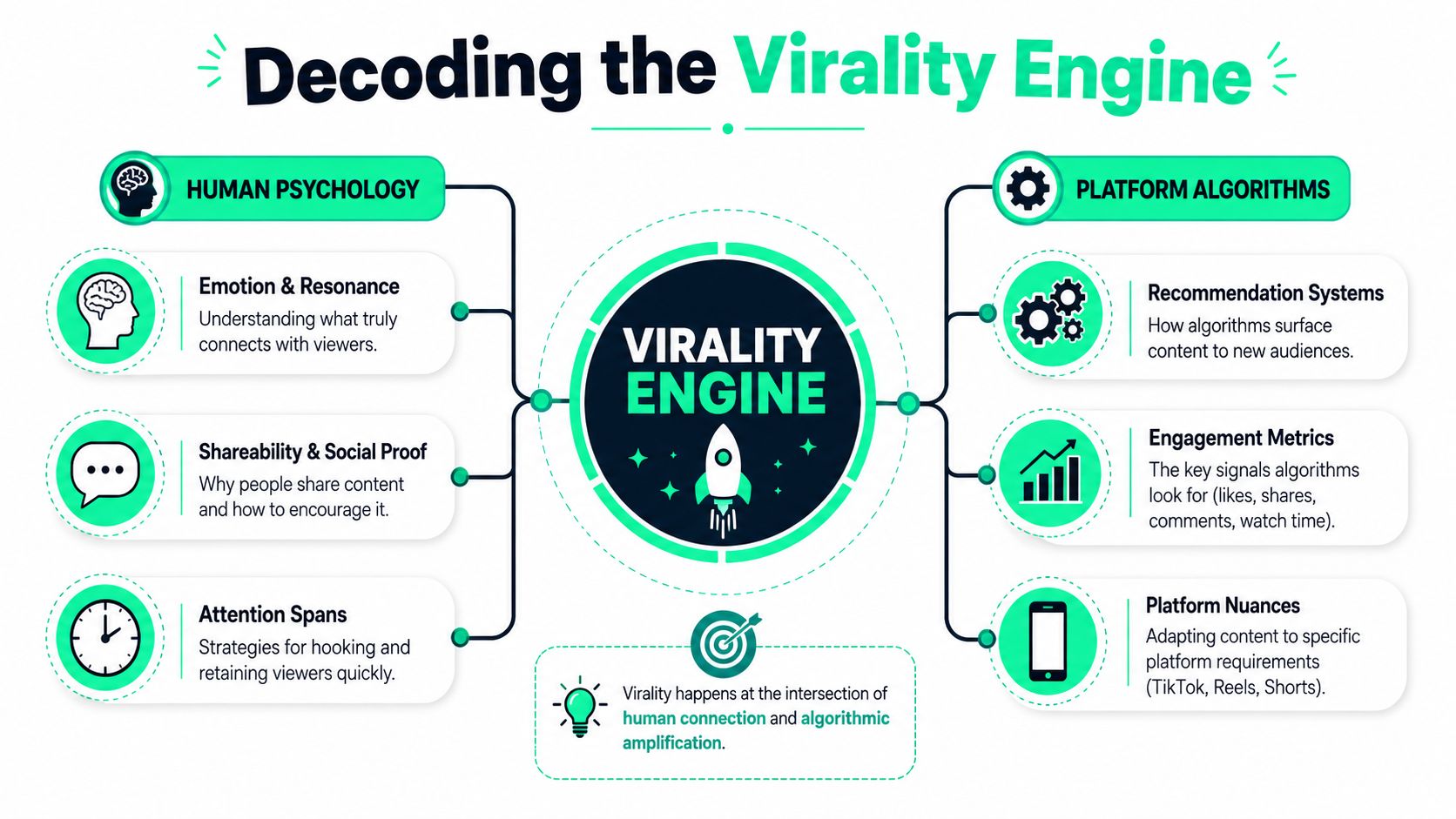
Virality isn't random enough to treat like a lottery ticket. A video may still surprise its creator, but the mechanics behind that surprise are usually consistent. People watch because something grabs them. They share because that something gives them a reason to pass it on.
Harvard Business Review reported that its analysis covered about **430 billion video views** and **100,000 consumer data points**, and found that the strongest drivers of viral success were **psychological response** and **social transmission**, not simple exposure alone, in its research on [why some videos go viral](https://hbr.org/2015/09/why-some-videos-go-viral). That changes the working model completely. The question stops being “How can this get seen?” and becomes “What reaction does this create, and why would someone share it?”
### Why luck is the wrong model
Creators who rely on luck usually over-focus on inputs that are easy to count. More posts. More sounds. More hashtags. More attempts. Those can matter, but they don't explain why one short clip gets shared between friends while another gets ignored in the feed.
A better model treats virality as the overlap of two systems:
| System | What it responds to | What creators control |
|---|---|---|
| **Human response** | Curiosity, surprise, tension, identity, usefulness, emotion | Hook, framing, storytelling, payoff |
| **Platform distribution** | Retention, engagement, click decision, early momentum | Edit pace, packaging, timing, platform fit |
That's why strong creators study both psychology and mechanics. The algorithm can amplify a video, but only after people respond to it in ways the platform recognizes.
> **Practical rule:** A video spreads faster when the viewer feels something quickly and knows exactly why another person should see it.
The most durable way to improve short-form performance is to design for that reaction on purpose. A sharp opening line. A visual contradiction. A clear promise. A payoff that resolves the tension introduced in the first seconds. The details vary by niche, but the structure doesn't.
### The two forces behind spread
Psychological response is what makes a viewer stop. Social transmission is what makes the video move beyond the first audience. Those aren't the same thing.
A clip can hold attention because it's satisfying, surprising, or useful. But it spreads when it also helps the viewer express something. Identity is a common trigger. So is status, humor, outrage, or the simple urge to send a useful tip to a friend. That's why many high-performing shorts feel easy to describe in one sentence.
For creators trying to improve their hit rate, the practical takeaway is to build every concept around two questions:
- **Why would someone watch this through the payoff?** The answer usually lives in tension, novelty, clarity, or emotional stakes.
- **Why would someone share this?** The answer usually lives in usefulness, self-expression, relatability, or conversation value.
A creator who wants a deeper breakdown of opening mechanics can study [scroll-stopping video hooks](https://www.blitzreels.com/blog/the-science-of-scroll-stopping-video-hooks). The important point is broader than hooks alone. Viral content has an engineered spine. It gives the viewer a reason to stay, then a reason to distribute.
## Planning Content That Is Built to Spread
Most short videos fail before recording starts. The edit gets blamed later, but the actual problem is usually the concept. A weak idea can be polished. It still won't travel far.
The cleanest planning workflow starts with **format selection**, not with random inspiration. Formats are reusable containers. Examples include reaction-plus-take, before-and-after reveal, mistake breakdown, unpopular opinion, ranked list, mini case critique, myth bust, or behind-the-scenes transformation. A good format helps the viewer understand the video within a second.
### Start with format before topic
The fastest way to generate stronger ideas is to reverse-engineer videos already working in the niche, then strip them down to components instead of copying surface details.
Use a simple teardown like this:
1. **Hook type**
Was the opening a bold claim, a visual surprise, a question, or a result-first teaser?
2. **Story movement**
Did the video escalate tension, stack proof, or jump straight to payoff?
3. **Share trigger**
Was it useful enough to save, relatable enough to send, or provocative enough to comment on?
4. **Production pattern**
Did it rely on direct-to-camera delivery, clipped narration, captions, title cards, or quick reframes?
That process gives a creator a template bank, not just an idea bank. It also prevents trend-chasing without strategic fit. Trends can help, but only when they match the audience's interests and the creator's delivery style.
For teams that need more prompt starters, this list of [actionable social media tips for brands](https://supgrowth.com/2025/10/27/social-media-content-ideas/) is useful as a brainstorming input. The value isn't in copying prompts word for word. It's in turning broad ideas into platform-native short-form concepts.
### Build ideas with a spread test
Before recording, each concept should pass a quick filter. If it fails here, it usually won't get rescued in editing.
- **Instant clarity**
Can someone understand the premise in one glance or one sentence?
- **Built-in tension**
Is there a gap between what the viewer knows now and what the video promises to reveal?
- **Audience relevance**
Does it solve a problem, validate an identity, or speak to a recognizable frustration?
- **Distinct angle**
Is there a twist, point of view, or framing choice that makes it feel specific rather than generic?
> A video idea is stronger when the hook and the payoff are obvious before the camera turns on.
One practical method is to write three versions of the same concept before filming. One educational, one contrarian, one curiosity-based. Then choose the strongest opening. A creator who needs examples can study proven [TikTok hook ideas](https://www.blitzreels.com/blog/50-tiktok-hooks-to-stop-the-scroll-in-2025) and adapt the structure to their own niche, product, or personality.
Creators who plan this way don't need every upload to be original in the purest sense. They need it to be recognizable, easy to enter, and different enough to earn attention.
## Editing for Maximum Viewer Retention
A strong idea still dies in the timeline if the opening drags. Short-form audiences don't wait for context. They decide fast, and the edit has to respect that.
A practical viral-video workflow starts with a **2–3 second hook**, because viewers often decide in that window whether to keep scrolling. The same workflow recommends **pattern interrupts every 4–8 seconds**, such as B-roll, text pop-ups, angle changes, or sound effects, and it also recommends hardcoded captions for silent viewing in this guide to [viral video creation](https://swarmify.com/blog/viral-video-creation-complete-beginners-guide/).
### Cut the opening without mercy
The first edit pass should remove anything that delays the premise. That includes greetings, logo animations, scene-setting, slow push-ins, and self-introductions that don't create stakes.
Instead, start on the most specific and highest-tension moment available. That might be:
- **The result first**
Show the transformation, then explain it.
- **The problem first**
Name the mistake, failure, or misconception immediately.
- **The promise first**
Tell the viewer what they'll get if they stay.
- **The contradiction first**
Open with something that challenges what the viewer expects.
Many creators confuse “good editing” with “busy editing.” Fast cuts alone don't create retention. The pacing has to serve comprehension. Every cut should either clarify, re-engage, or intensify.
### Edit for silent viewing and motion
A large share of short-form viewing happens with the sound off or with partial attention. That changes how editors should build the frame.
Use captions as part of the storytelling, not as a compliance layer added at the end. Good captions highlight the core phrase, preserve rhythm, and make the argument readable in motion. Hardcoded subtitles, bold title cards, and text callouts often do more retention work than background music.
A practical editing checklist looks like this:
| Edit element | What it should do | Common mistake |
|---|---|---|
| **Opening title card** | Establish stakes fast | Saying too little or too much |
| **Captions** | Make the point scannable without sound | Small text or low contrast |
| **B-roll and inserts** | Reset attention and support the claim | Random visuals that interrupt comprehension |
| **Zooms and reframes** | Add visual movement | Using them so often they feel gimmicky |
| **Ending beat** | Deliver payoff cleanly | Fading out after the main point lands |
A strong edit also assumes repurposing from day one. Footage should be easy to clip, resize, and reframe for TikTok, Reels, Shorts, and LinkedIn video without rebuilding the project from scratch.
### Use tools to increase testing speed
Manual editing is often where short-form systems break. Not because creators lack taste, but because repetitive production work eats the time needed for testing more concepts.
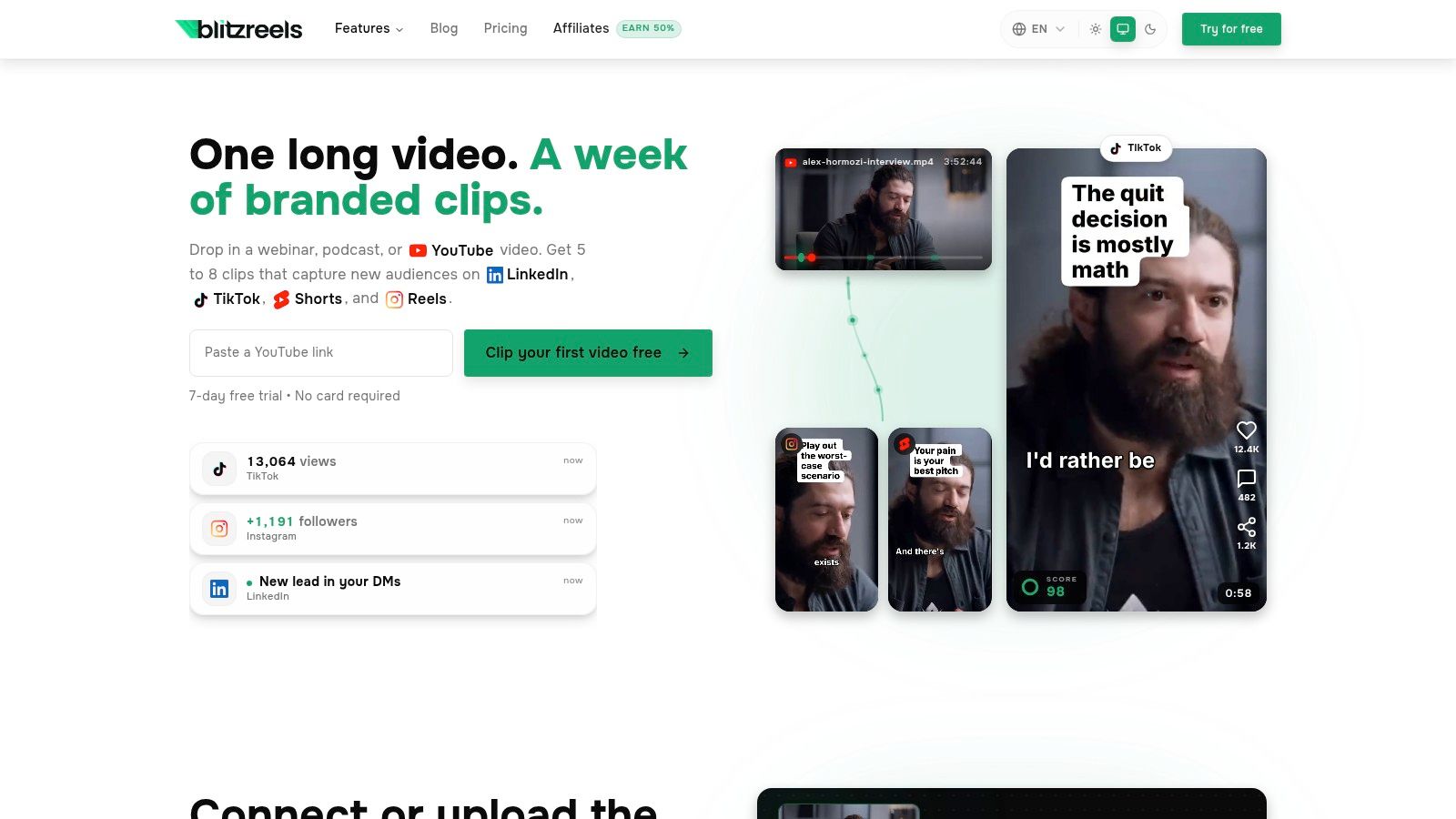
Tools can reduce that friction. [BlitzReels](https://www.blitzreels.com/blog/10-quick-pro-techniques-for-polished-short-form-videos) is one option for clipping moments from longer footage, generating captions, reframing vertical shots, resizing exports, and adding title cards quickly. That matters because better viral odds usually come from faster learning cycles, not from overworking one post.
A live example of short-form pacing is worth studying:
The practical standard is simple. If a cut, caption, or visual change doesn't help the viewer stay oriented and interested, it probably doesn't belong.
## Mastering Platform Distribution and Nuances
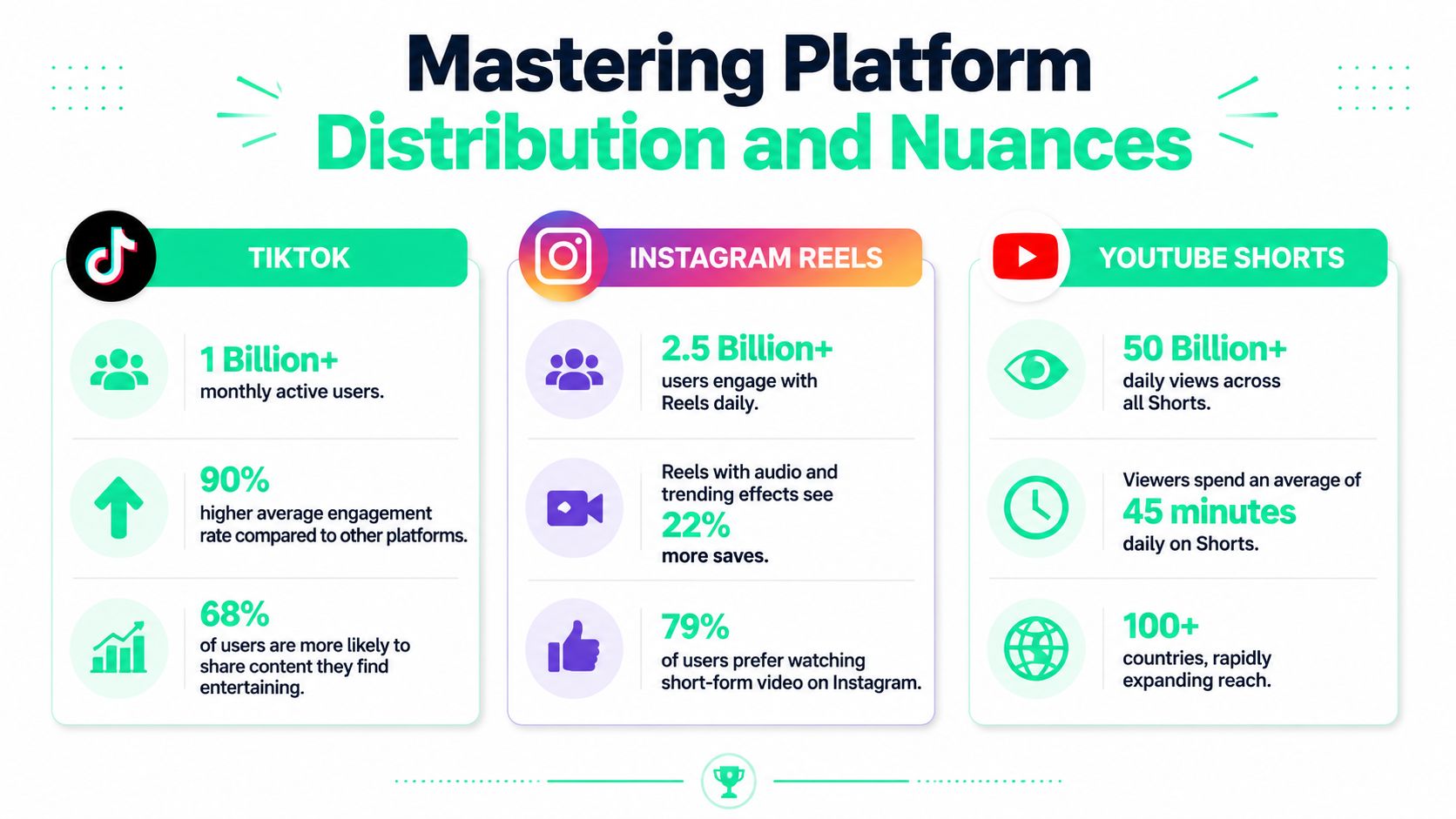
Creators lose reach when they treat distribution like admin work after the edit is done. Platform fit is part of the production system. The same core idea often needs different framing, pacing, and packaging to earn distribution on TikTok, Reels, and Shorts.
### How platform goals change the cut
Each platform promotes different viewer behavior.
TikTok usually rewards speed. The premise needs to be clear fast, often in the first line, first frame, or first action. Earlier in the article, the cited benchmark data showed that very short TikToks can outperform longer cuts in some cases. The practical takeaway is to test the compressed version first when the idea is simple enough to survive compression.
Instagram Reels usually gives polished, easy-to-share videos more room to travel. Readable captions, cleaner visual hierarchy, and a stronger save or DM angle tend to help. Reels is often less forgiving of messy framing, especially for educational or brand-led content.
YouTube Shorts behaves differently because it sits inside a larger YouTube session. A Short can get feed distribution, search traffic, channel page views, and follow-on interest from long-form content. Packaging matters more. Title and thumbnail choices can influence performance beyond the Shorts feed itself.
For creators deciding where a format belongs, this breakdown of [Reels, TikTok, and Shorts for creators](https://www.blitzreels.com/blog/reels-tiktok-or-shorts-which-platform-is-best-for-creators-in-2026) is a useful reference before posting the same asset everywhere.
A good distribution workflow starts with one master idea, then creates platform-specific versions. Do not just crop and repost. Change the opening line, trim setup that only works on one feed, and adjust captions to match how people browse that app.
For music-driven edits, choreography clips, or rhythm-first storytelling, [MelodicPal's music video insights](https://www.melodicpal.ai/en/blog/how-to-make-music-videos) are useful, especially when the visual pacing needs to support the audio instead of fighting it.
### What to watch in the first 72 hours
Early performance matters because platforms test content in waves. The first audience sample usually tells you whether the video has clear platform fit, weak packaging, or the wrong viewer match.
Skip vanity benchmarking here. A post does not need a breakout view count in 72 hours to be useful. It does need to answer a few operational questions fast:
- **Did the opening frame stop the scroll on this platform?** TikTok may need a harder pattern interrupt, while Reels may respond better to clarity and polish.
- **Did the caption add context or friction?** Good captions sharpen the angle. Generic hashtag stacks waste space.
- **Did the version match the platform's traffic sources?** Shorts often benefits from stronger titling because discovery can happen outside the feed.
- **Did the publish window match actual audience activity?** Use account-level analytics, not generic posting-time advice.
Strong teams separate creative quality from distribution quality. A solid video can stall because the first frame is wrong for the feed. An average video can travel because the platform-specific packaging made the value obvious.
The goal is not to chase three different algorithms with three unrelated strategies. The goal is to build one repeatable system: one concept, several cuts, platform-specific packaging, then a fast read on which version earned the best distribution.
## The Rapid Test and Iterate Framework
Most creators quit too early on a format that might have worked with better packaging. Others keep repeating a weak format because one post spiked for reasons they didn't isolate. Both mistakes come from reading results emotionally instead of diagnostically.
For YouTube specifically, expert analysis emphasizes **thumbnail and title click-through rate** plus **retention** as the two metrics most associated with breakout performance, and it recommends testing hooks, thumbnails, and intros across multiple uploads until the same structure works at least **5–10 times** before treating it as reliable, as explained in this [YouTube analysis of viral-form content](https://www.youtube.com/watch?v=-5HlhFImymk).
### Separate format from packaging
A format is the repeatable content structure. Packaging is how the viewer is invited into it. When a short underperforms, creators often change both at once and learn nothing.
A cleaner review process asks these questions:
| Question | If the answer is no | Likely issue |
|---|---|---|
| Did people choose to watch? | Weak click decision | Title, thumbnail, opening frame |
| Did they keep watching? | Drop-off early | Hook, pacing, clarity |
| Did they respond or share? | Passive viewing | Weak payoff, low relevance, low emotional charge |
This distinction matters because a useful concept can fail from poor framing. A weak concept can also get a temporary lift from good packaging. The point of testing is to tell those apart.
### Run clean tests instead of random changes
A practical system uses a small number of controlled variables. One series might test opening lines. Another might test title card wording. Another might test whether the payoff arrives earlier.
Use a cycle like this:
1. **Pick one repeatable format**
Keep the core structure stable for several uploads.
2. **Choose one variable per batch**
Hook wording, intro pacing, visual framing, or CTA style.
3. **Review the retention pattern**
Don't just ask whether the video got views. Ask where attention dropped.
4. **Keep a simple log**
One sentence on what changed and one sentence on what happened is enough.
> Better testing usually comes from fewer variables, not more creativity at once.
A/B thinking matters here, even if the platforms don't always offer formal split testing for every creator workflow. This primer on [A/B testing for creators](https://www.blitzreels.com/glossary/a-b-testing) is useful because it pushes teams to isolate causes instead of guessing.
The creators who consistently improve aren't always the most naturally talented on camera. They're often the ones who can look at a post, identify what failed, and produce the next test fast.
## Your Viral Video Launch Checklist
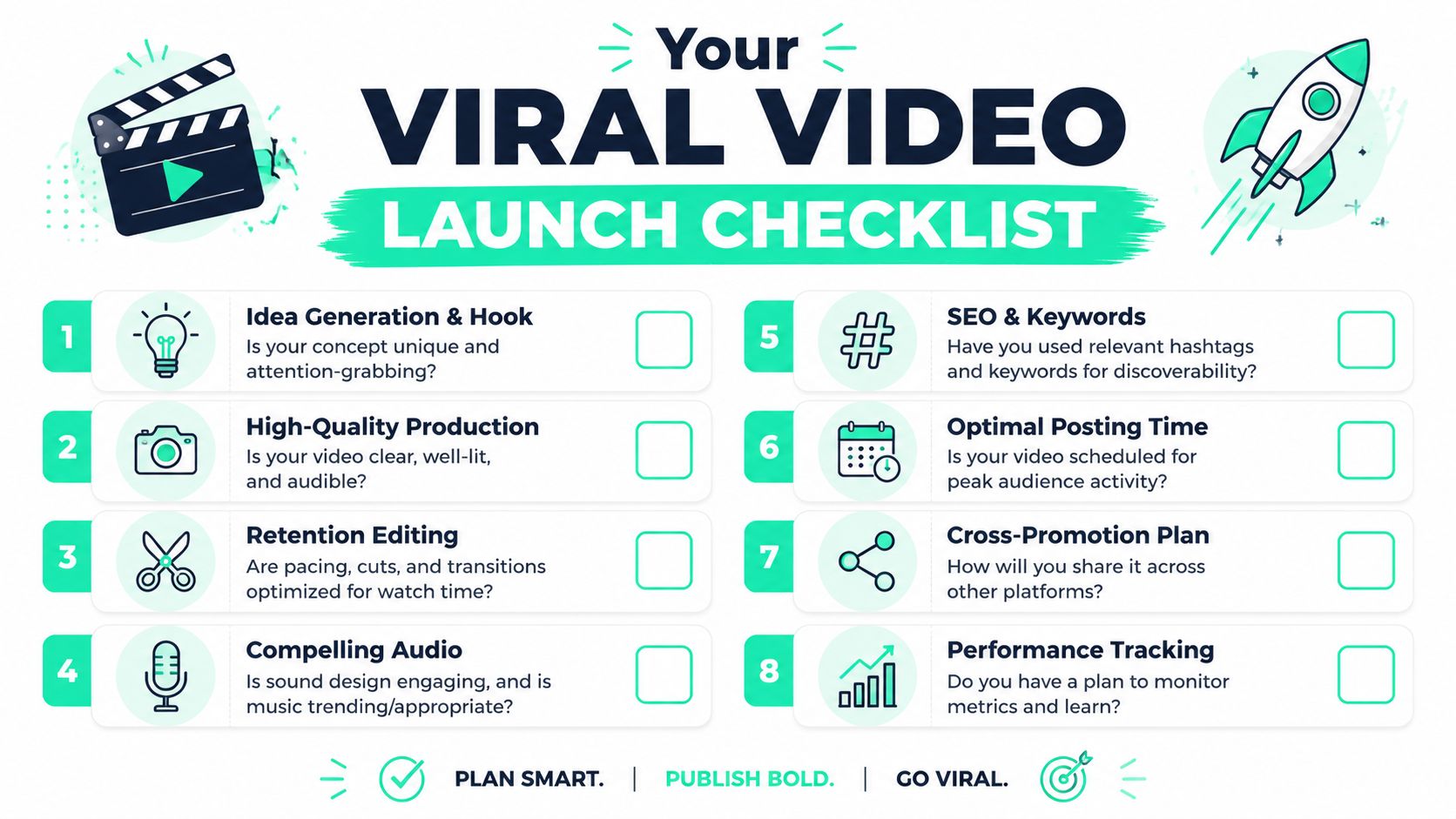
Virality is easier to pursue when the workflow is visible. A checklist prevents the usual mistakes. Weak hook. Slow open. Missing captions. No platform-specific packaging. No test plan after launch.
The practical value of a checklist isn't discipline for its own sake. It protects the parts of the process that most often get skipped when the team is rushed.
### Pre publish checks that matter
Run this before every upload:
- **The concept is easy to explain**
If the idea can't be summarized quickly, the viewer probably won't grasp it quickly either.
- **The hook lands immediately**
The first frame, first line, or first motion should create a reason to stay.
- **The edit keeps moving**
Dead air, repeated points, and decorative shots should be cut.
- **Captions are readable and intentional**
They should help tell the story, not just mirror the audio.
- **The frame is platform-ready**
Reframing, resizing, cropping, and title-safe text placement should be checked before export.
- **The platform package matches the platform**
TikTok needs immediacy. Reels needs clean shareability. Shorts needs stronger packaging discipline.
### Post launch checks that improve the next video
A launch checklist should continue after publishing. That's where the system becomes repeatable.
Use these review prompts:
- **Did the opening frame earn the watch?**
- **Did the payoff arrive fast enough?**
- **Did comments show confusion, agreement, or sharing intent?**
- **Did the video feel too long, too dense, or too thin?**
- **What single variable should change in the next version?**
> The goal isn't to make one video perfect. The goal is to make the next five videos sharper.
Creators who want to learn how to make videos go viral usually look for one tactic that enables everything. That's almost never how it works. Better odds come from a stack of disciplined choices. Strong concept. Fast hook. clean edit. Platform-aware packaging. Measured iteration.
---
BlitzReels helps teams turn raw footage into short-form videos faster with clipping, captions, reframing, resizing, and repurposing tools built for TikTok, Reels, Shorts, LinkedIn, and other vertical formats. For creators who want a more repeatable record-to-publish workflow, [BlitzReels](https://blitzreels.com) is worth exploring.